
Antique Furniture Styles: A Photo-Based Guide to Dating and Naming Your Pieces
A practical guide to recognizing and naming antique furniture styles using visual details. Covers the key design markers that distinguish Queen Anne from Chippendale, Victorian from Eastlake, and how to use photos to narrow down period and origin.
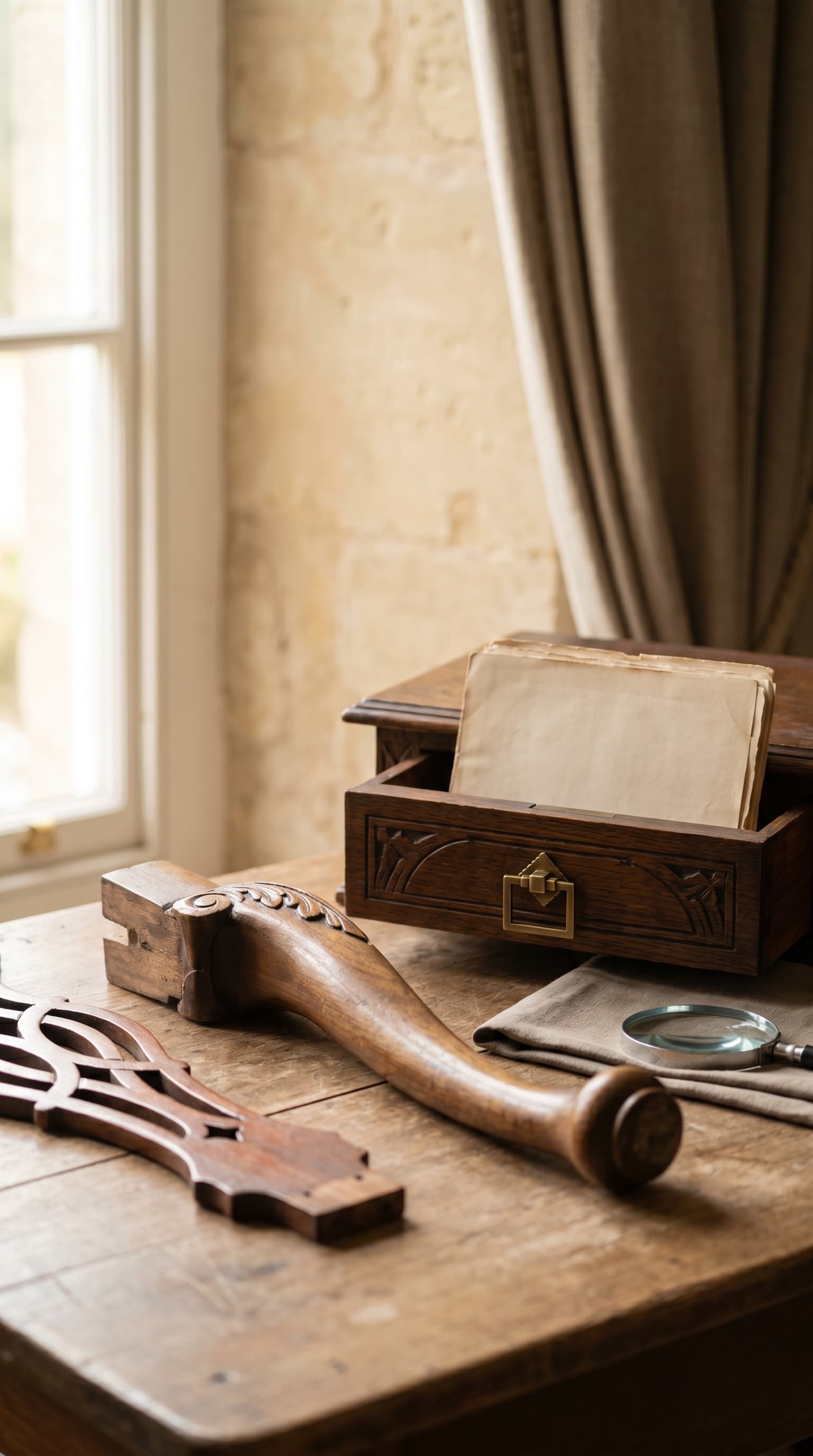
What You're Really Trying to Name
When you call something "antique furniture," you're usually trying to narrow down two things: when it was made and what style tradition it follows. Antique furniture styles aren't just aesthetic labels—they're shorthand for specific periods, construction methods, and design philosophies that help you understand what you own and communicate with dealers, appraisers, or other collectors.
Most people start with a hunch based on shape or ornament, but antique furniture styles overlap, get revived decades later, and show regional quirks that make quick labels tricky. A cabriole leg might point to Queen Anne, but it could also be Chippendale, rococo revival, or even a 1920s reproduction. The goal isn't perfection—it's getting close enough to research comparable pieces and understand value drivers.
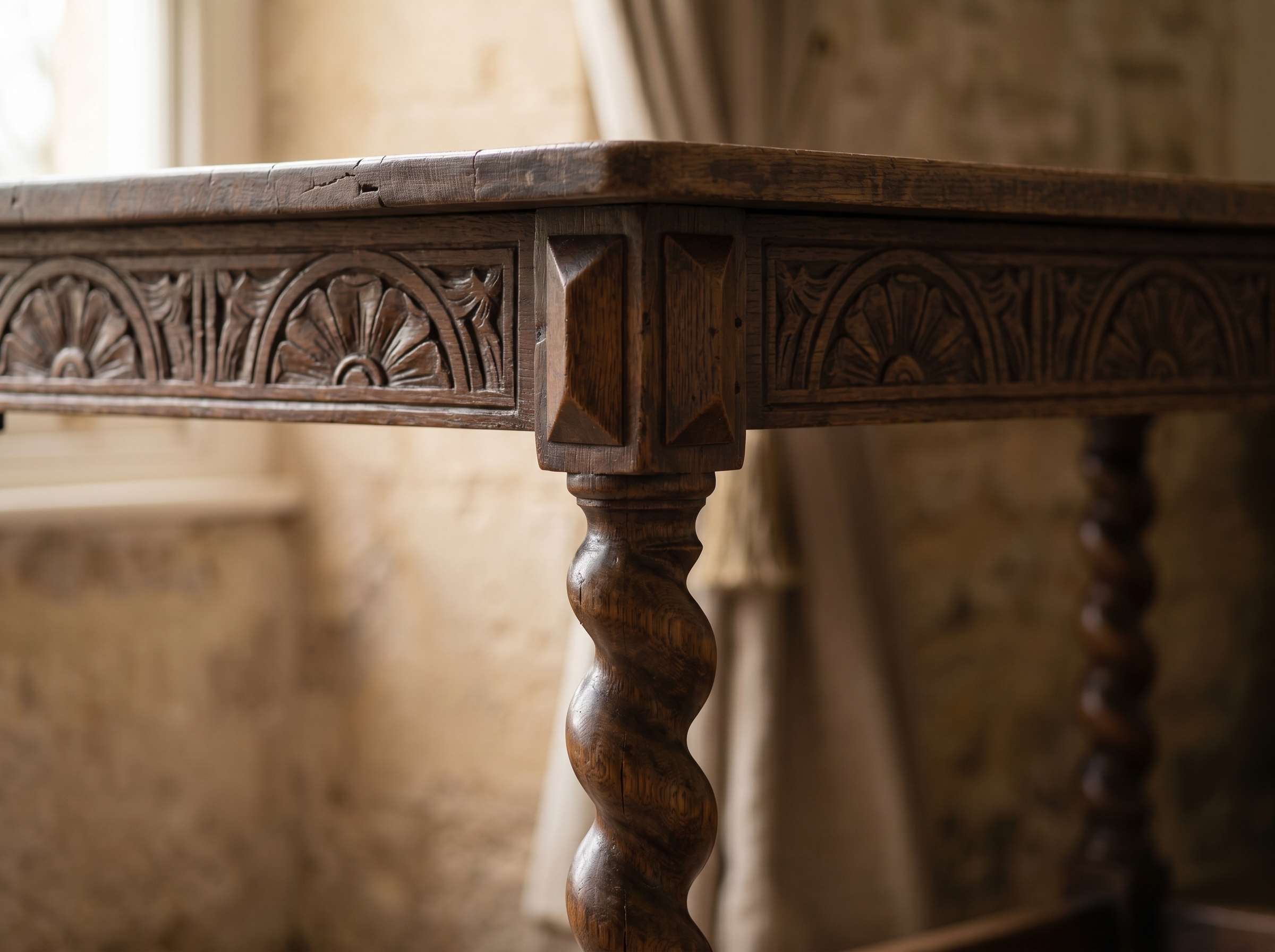
Visual Checklist for Major Antique Furniture Styles
Each style has signature moves. Here's what to look for in photos or in person:
Queen Anne (circa 1720–1750)
Curved lines dominate. Cabriole legs with pad or drake feet, fiddle-back splats, minimal carving, walnut or cherry construction. Proportions feel light and elegant.
Chippendale (circa 1750–1780)
More ornate than Queen Anne. Ball-and-claw feet, pierced or carved splats, Gothic or Chinese motifs, mahogany primary wood. Heavier, more architectural.
Federal/Hepplewhite (circa 1780–1820)
Straight, tapered legs, shield-back or oval-back chairs, inlay and veneers, delicate proportions. Influenced by neoclassical design. Mahogany and satinwood common.
Empire (circa 1810–1840)
Bold, heavy forms. Columns, carved animal feet (paw or hoof), dark mahogany or rosewood, gilt stenciling or ormolu mounts. Greek and Roman motifs.
Victorian (circa 1840–1900)
This is an umbrella term covering several substyles: Gothic Revival (pointed arches, tracery), Rococo Revival (cabriole legs, heavy carving, tufted upholstery), Renaissance Revival (architectural pediments, burl panels), and Eastlake (geometric incised lines, turned spindles). Victorian pieces tend toward dark woods, mass ornament, and machine-assisted carving.
Arts and Crafts/Mission (circa 1900–1920)
Reaction against Victorian excess. Straight lines, exposed joinery (mortise-and-tenon, pegs), quarter-sawn oak, minimal ornament. Names like Stickley, Limbert, and Roycroft signal high value.
Art Nouveau (circa 1890–1910)
Flowing, organic curves. Whiplash lines, floral and natural motifs, exotic woods or mixed materials. Less common in American furniture than European.
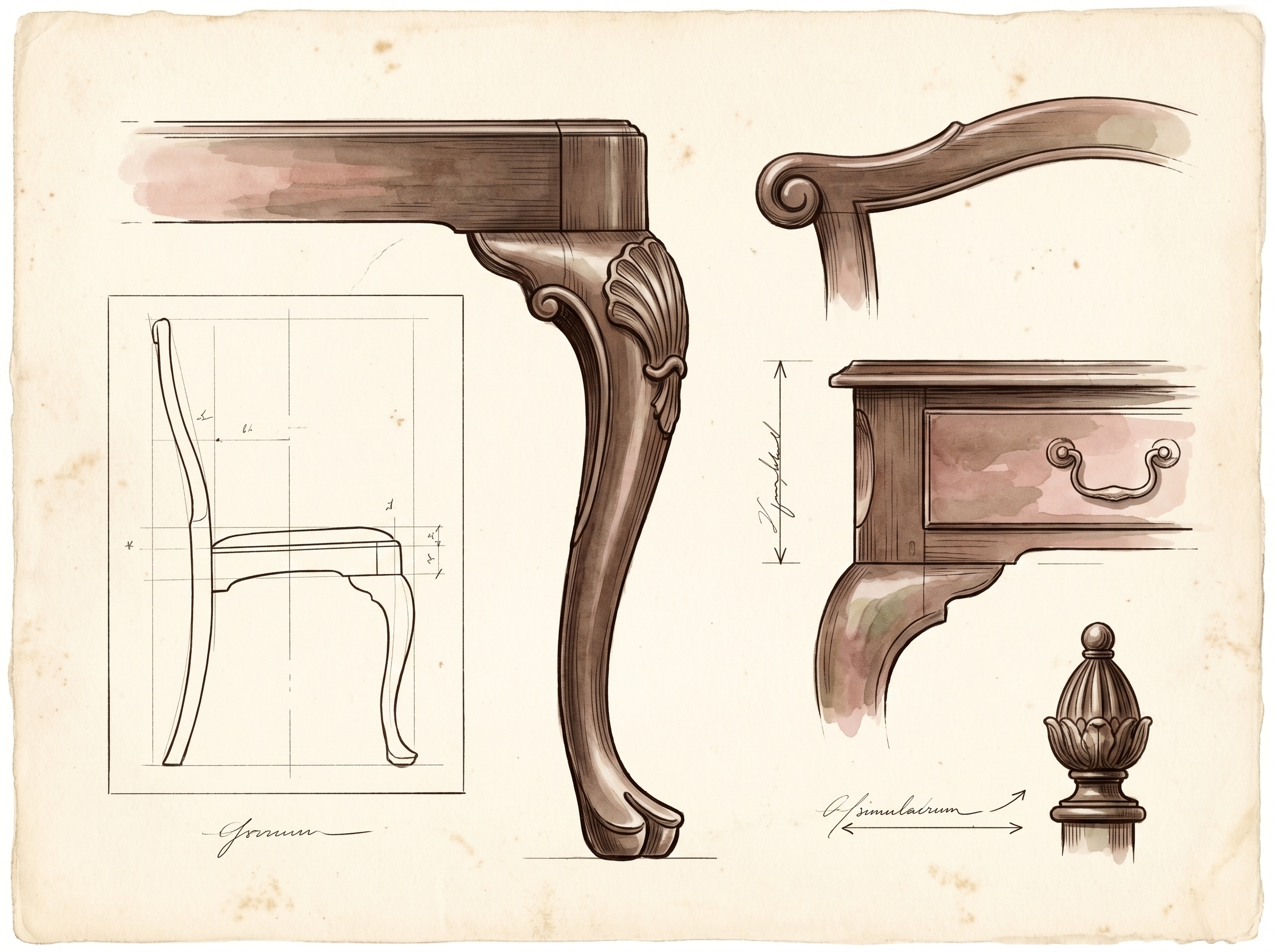
Common Antique Furniture Style Confusions
Queen Anne vs. Chippendale
Both use cabriole legs, but Queen Anne stops at simple pad feet and restrained carving. Chippendale adds ball-and-claw feet, pierced back splats, and heavier ornament. If it feels delicate and curvy, lean Queen Anne. If it's showy and architectural, lean Chippendale.
Victorian Rococo Revival vs. Original Rococo
True rococo is 18th-century French. Victorian rococo revival (1850s–1870s) mimics the curves and carving but uses machine tools, laminated construction (like Belter), and heavier proportions. Check for screws, plywood substrates, or overly uniform carving—all Victorian tells.
Federal vs. Sheraton
Both are neoclassical and overlap in time. Federal (American term) often refers to Hepplewhite-inspired pieces with shield backs and tapered legs. Sheraton leans toward square backs, reeded legs, and painted or inlaid decoration. In practice, dealers mix the terms freely.
Empire vs. Victorian Renaissance Revival
Empire is earlier (1810–1840) and draws from Napoleonic France: columns, lyres, paw feet. Renaissance Revival (1860s–1880s) borrows from Italian palaces: heavy pediments, burl veneers, applied medallions. If it feels Greek or Roman, call it Empire. If it feels palatial and medieval-meets-Renaissance, it's likely Renaissance Revival.
Eastlake vs. Arts and Crafts
Both reject curves, but Eastlake (1870s–1890s) uses incised geometric ornament, turned spindles, and factory production. Arts and Crafts (1900–1920) emphasizes handcraft, exposed joinery, and ethical labor. Eastlake often has more surface decoration; Arts and Crafts prizes plain wood and honest construction.
How to Use Photo Identification to Narrow Down Antique Furniture Styles
Photos are your most practical tool for style classification. Here's how to make them work:
Capture the whole piece and the details
Start with a full view showing proportions and form. Then zoom in on legs, feet, joints, back splats, hardware, and any carved or inlaid ornament. Style lives in these details.
Photograph hardware and construction clues
Hinges, drawer pulls, screws, and joinery can date a piece as much as style can. Hand-cut dovetails, wrought nails, and mortise-and-tenon joints suggest pre-1860. Machine-cut dovetails, round-head screws, and plywood point to later production or reproduction.
Compare your photos to reference images
Once you have clear shots, compare them to museum collections, auction archives, or style guides. Look for recurring patterns in leg shape, back design, and ornament. Even small differences—like the presence of a stretcher or the angle of a splay—can shift the ID.
Use tools built for visual matching
Manual comparison works, but it's slow. Tocuro lets you upload photos and get style suggestions based on visual patterns, construction details, and market data. It's faster than flipping through books and pulls from a wider range of examples than most collectors have access to. You get 7 free identifications per day, and the count resets daily, so you can work through a whole estate or collection without commitment.
Cross-check with wood type and finish
Antique furniture styles often favor specific materials. Queen Anne loves walnut. Chippendale prefers mahogany. Arts and Crafts champions quarter-sawn oak. If the wood doesn't align with the style, you might be looking at a revival, a regional variation, or a later piece.
Watch for mixed signals
Many pieces combine elements from multiple styles—either because they were made during a transition period, or because they're revivals. A chair with Chippendale legs and Victorian carving might be an 1870s eclectic piece, not a pure 1760s original. Mixed signals don't mean fake; they mean you need to dig deeper into dating and context.
Why Naming the Style Matters
Getting the antique furniture style right affects research, value, and how you talk about a piece. A Federal sideboard and an Empire sideboard might look vaguely similar to a casual observer, but they come from different decades, different cultural moments, and often command different prices. Naming the style gives you a starting point for:
- •Researching makers and regional centers
- •Finding comparable auction results
- •Understanding which details affect value (original finish, replaced hardware, quality of carving)
- •Communicating accurately with appraisers, dealers, or buyers
Style isn't everything—condition, provenance, and rarity matter too—but it's the first filter most buyers and researchers apply.
For more on how to use visual details to classify furniture beyond the antique range, see our guide on how to identify furniture style. If you're also trying to estimate what a piece might be worth, check out antique furniture valuation for a practical approach to pricing.
Start With What You Can See
You don't need a degree in decorative arts to get close on antique furniture styles. You need good photos, a willingness to compare details, and access to tools that let you test your hunches quickly. The more pieces you photograph and research, the faster you'll recognize the patterns that distinguish one style from another.
Ready to put a name to your piece? Upload a photo to Tocuro and let the platform suggest style matches based on what it sees in the image. From there, you can refine your research, explore comparable examples, and understand what you own with a lot less guesswork.
Photo identification
Identify Your Furniture
Use Tocuro to identify your item from a photo and get an estimated value range when market data is available.