
Why I Built Tocuro to Help Everyday People Become Collectors
An $85 estate sale chair—a Baker Furniture faux bamboo armchair—turned out to be worth $1,000+, and that discovery sparked the idea for Tocuro.
Why I Built Tocuro to Help Everyday People Become Collectors
The $85 Chair That Started Everything
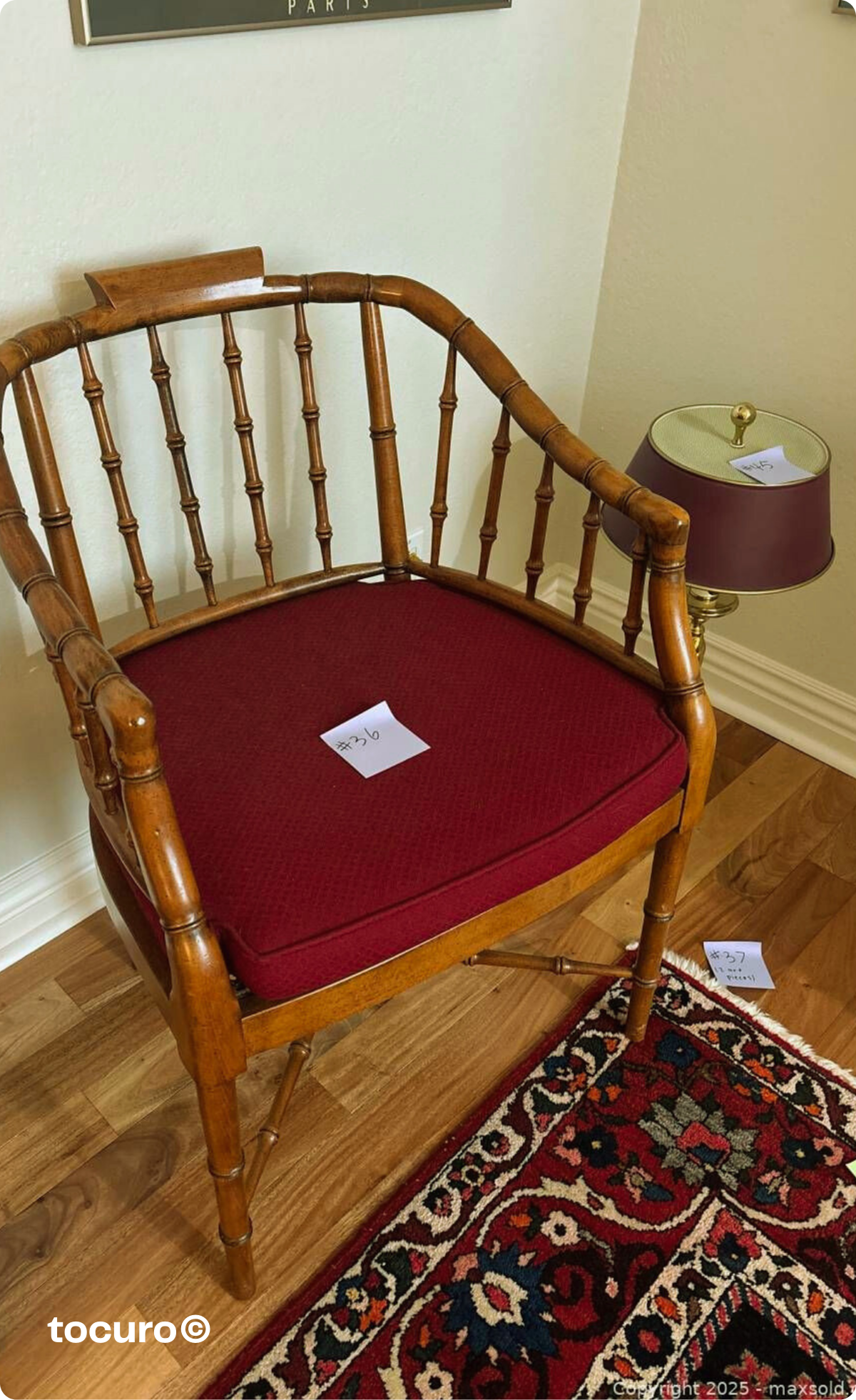
The original auction listing showing the Baker Furniture faux bamboo armchair listed at $85—before I knew what I'd actually found
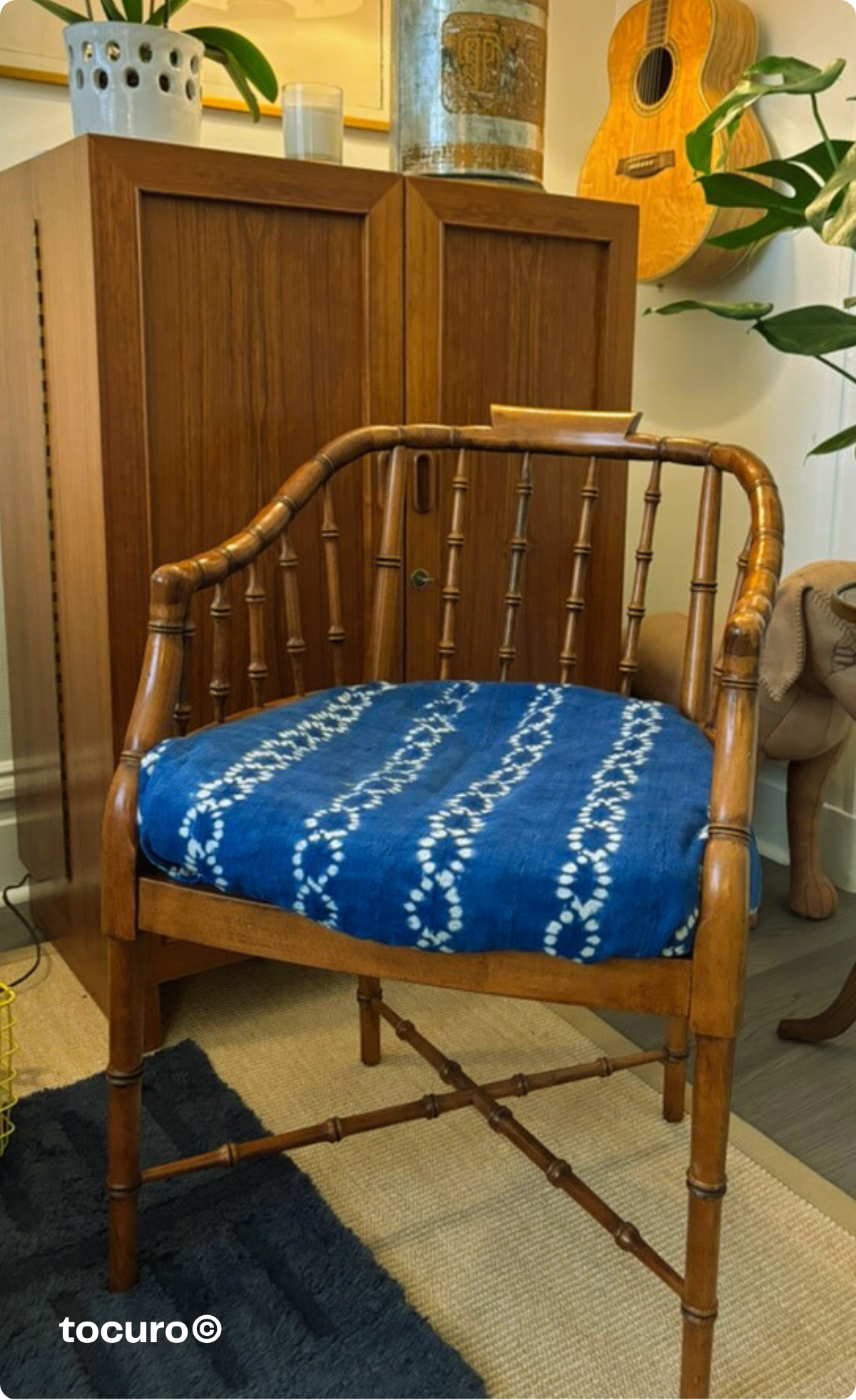
The same Baker armchair styled in my living room—where it proved to be the perfect transitional piece that worked in multiple spaces
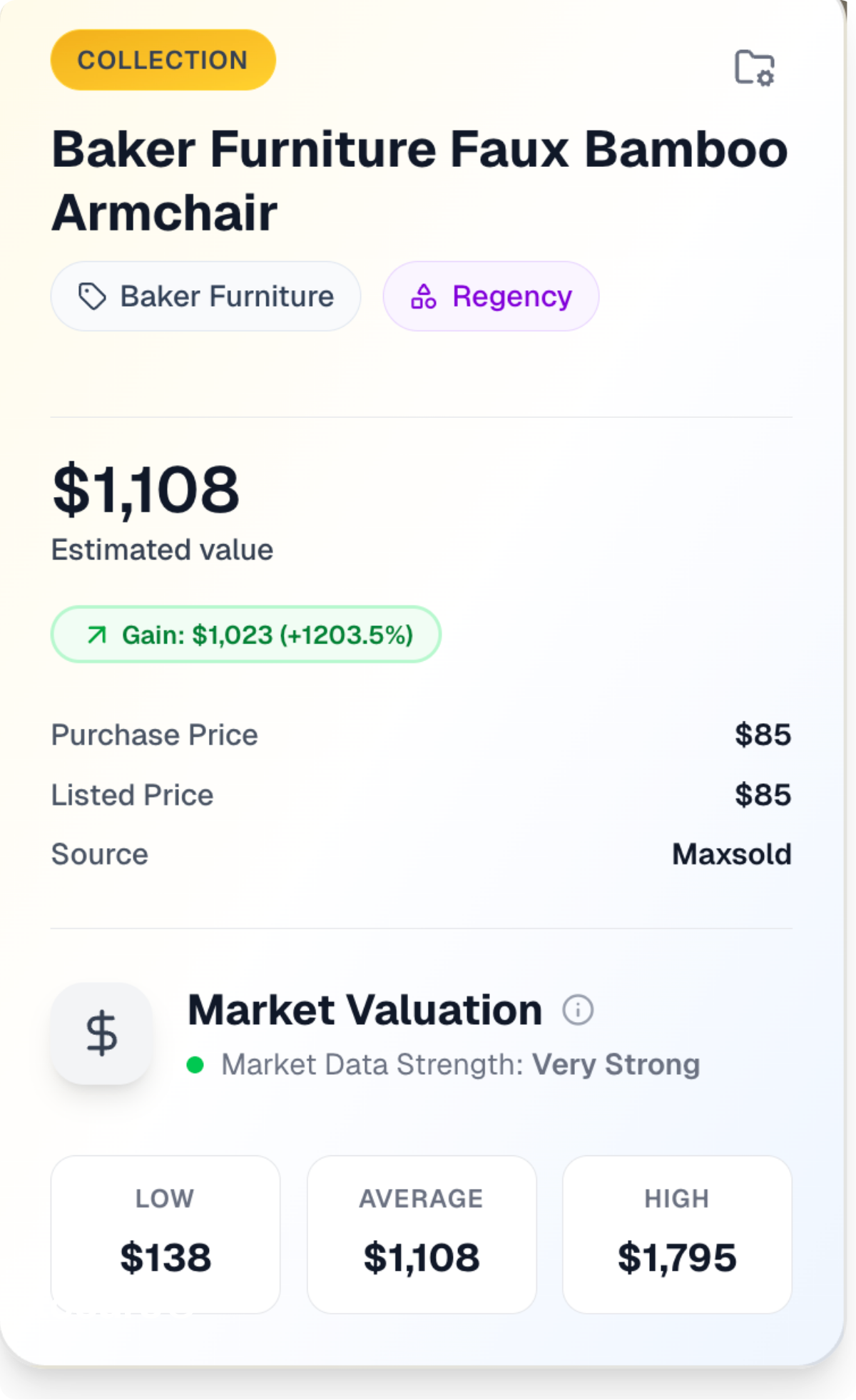
Tocuro's valuation results confirming the chair's actual market value of $1,000+—the moment that sparked the idea for the app
It really began with a chair. I bought a Baker Furniture faux bamboo armchair at an estate sale auction—a 1960s–70s Regency-style piece with cane detailing. Just a nice little chair I thought would be useful in my apartment. Brought it home, tried it in a few different rooms, and realized it was perfect. Transitional enough to work anywhere, quality construction, genuinely useful.
I liked it so much I wanted a pair. So I did what everyone does: reverse image search, marketplace hunting, the whole routine. Six browser tabs open, reading through listings, cross-referencing prices. Then you close your browser and it's gone—do the whole exercise again the next time you want to show someone or check your math. That's when I discovered my $85 chair was selling on reputable sites for $1,000 and up.
That feeling? It's specific and it's great. But it also planted a question: what about everything else I own? The things I've purchased, been gifted, inherited? I had no idea where any of them stood in terms of price, maker, style, history.
I have apps to track almost everything in my life, but when it comes to furniture and decor—things I'm literally surrounded by, things representing some of my biggest investment dollars—they're just sitting there with no organization, no evaluation, not really doing justice to their value or beauty.
Why Nothing Else Worked
Other apps exist that do pieces of what Tocuro does. But none did all of it, and more importantly, none approached it from a collector's perspective.
Existing Tools
- •Identification only
- •Transactional focus
- •Fragmented workflow
Tocuro
- •Identification + valuation + collection tracking
- •Collector-first approach
- •All-in-one
For me, it's not about how much something is worth. It's about how much something is worth to you. That worth isn't necessarily monetary. It can be sentimental. It can be style. It can be the way something happens to fit the room you're living in today. If something is special to you, you know it—and that's reason enough.
What I'm Actually Trying to Solve
For myself: I'm an amateur, hobbyist, wannabe collector. I stop at every antique store and garage sale. There's nothing like discovering something new, especially when you feel like you stumbled onto a great deal for something you love. And nothing beats finding a new piece that belongs with things you already own—a sister, brother, cousin to your existing collection.
Here's what I mean: A few years ago, my husband and I stumbled into March in San Francisco and fell for their Ceramiche Nicola Fasano splatterware—green splash on light yellow. We bought a platter, a pitcher, special-ordered a candelabra. Years later, at the March warehouse sale, we found more pieces in the exact same colors. Then months after that, I came across Portuguese ceramics by Bordallo Pinheiro in greens and pinks that would complement the splatterware, and in that same sale, a set of Etruscan Majolica leaf dishes. By following what excited me—the craft, the look, the feeling—I started with one type of ceramics, followed a thread to the next, and before I knew it, I'd built an interesting, visually dynamic collection of pottery.
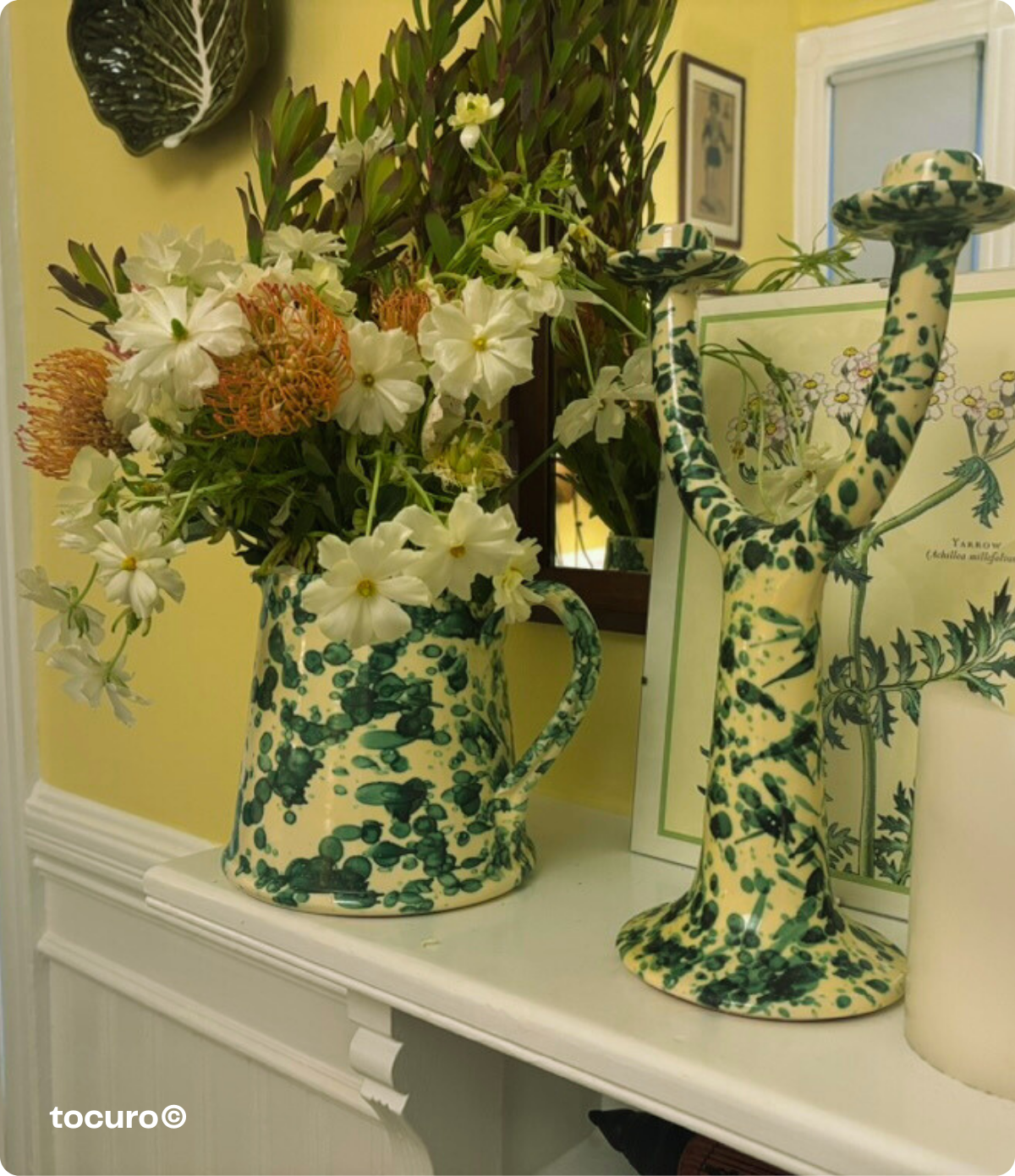
Ceramiche Nicola Fasano splatterware pitcher in green splash on light yellow—one of the first pieces that sparked my ceramics collecting journey and taught me to follow what excites me, not what matches
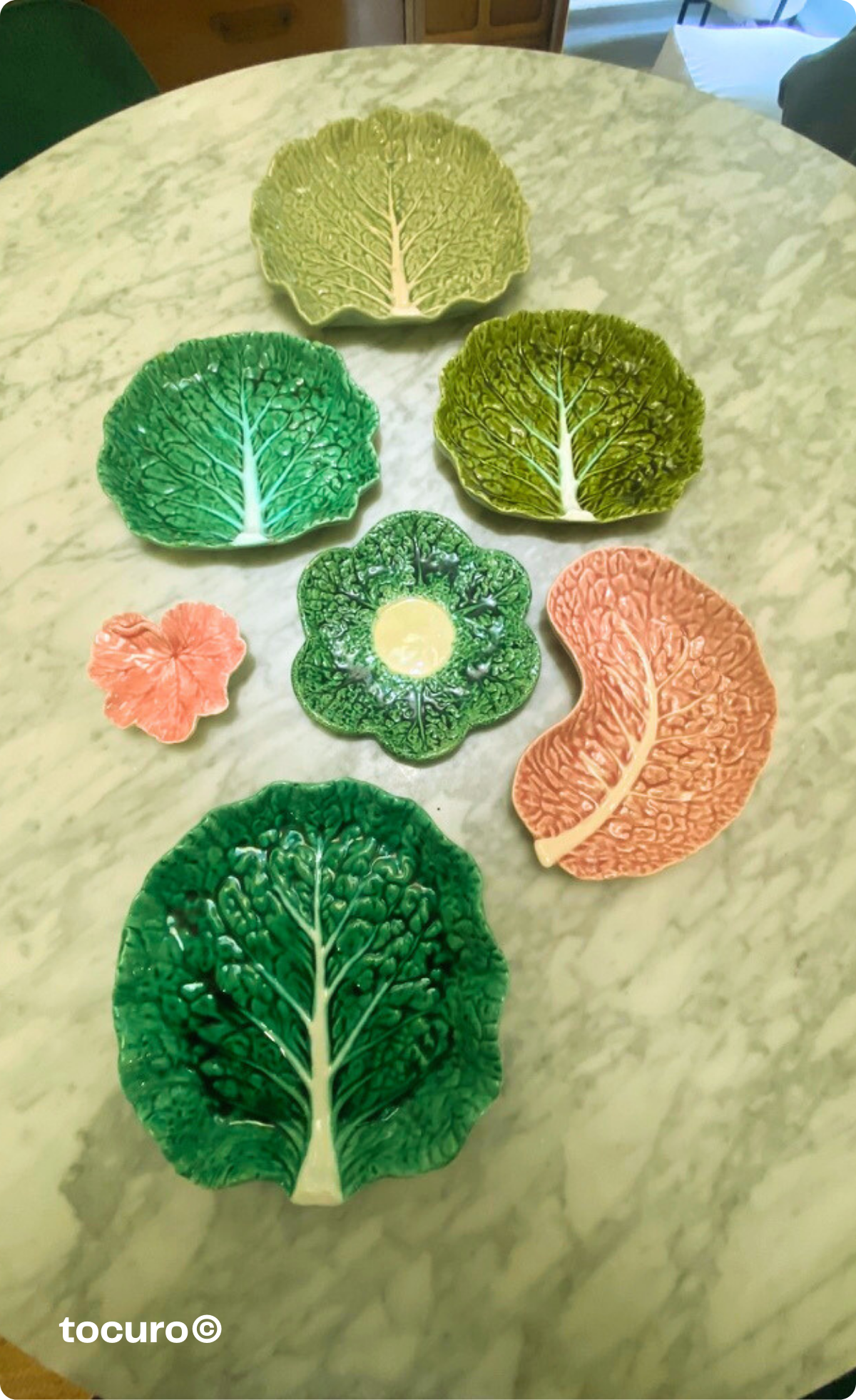
My Bordallo Pinheiro cabbage dish collection displayed together—what started as one impulse purchase grew into a family of Portuguese pottery in greens, pinks, and corals that now anchors my ceramics collection
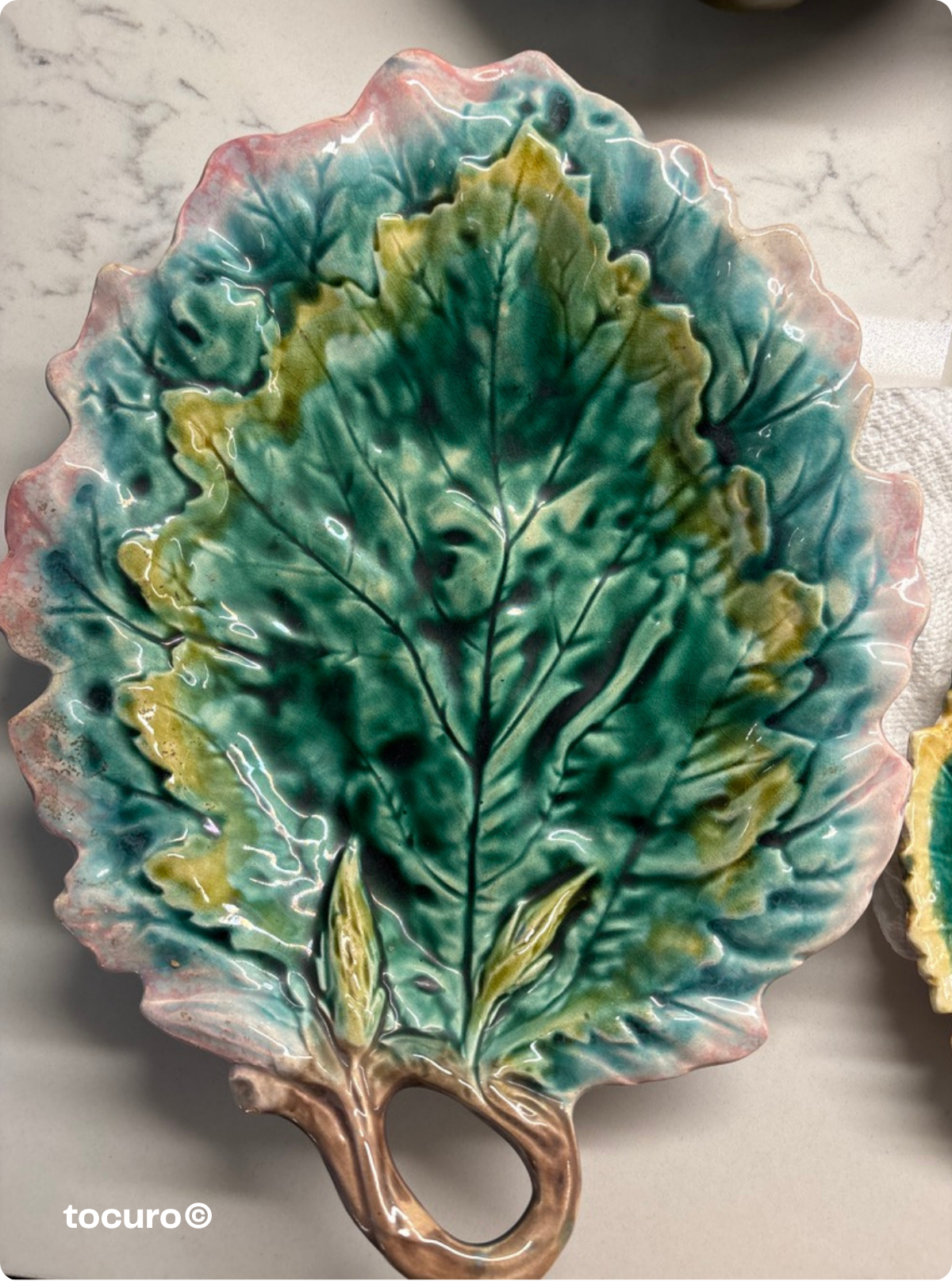
An Etruscan Majolica leaf dish in turquoise glaze—found at the same sale as my Bordallo Pinheiro pieces, this Victorian-era ceramic shows how following color connections leads to unexpected collection pairings
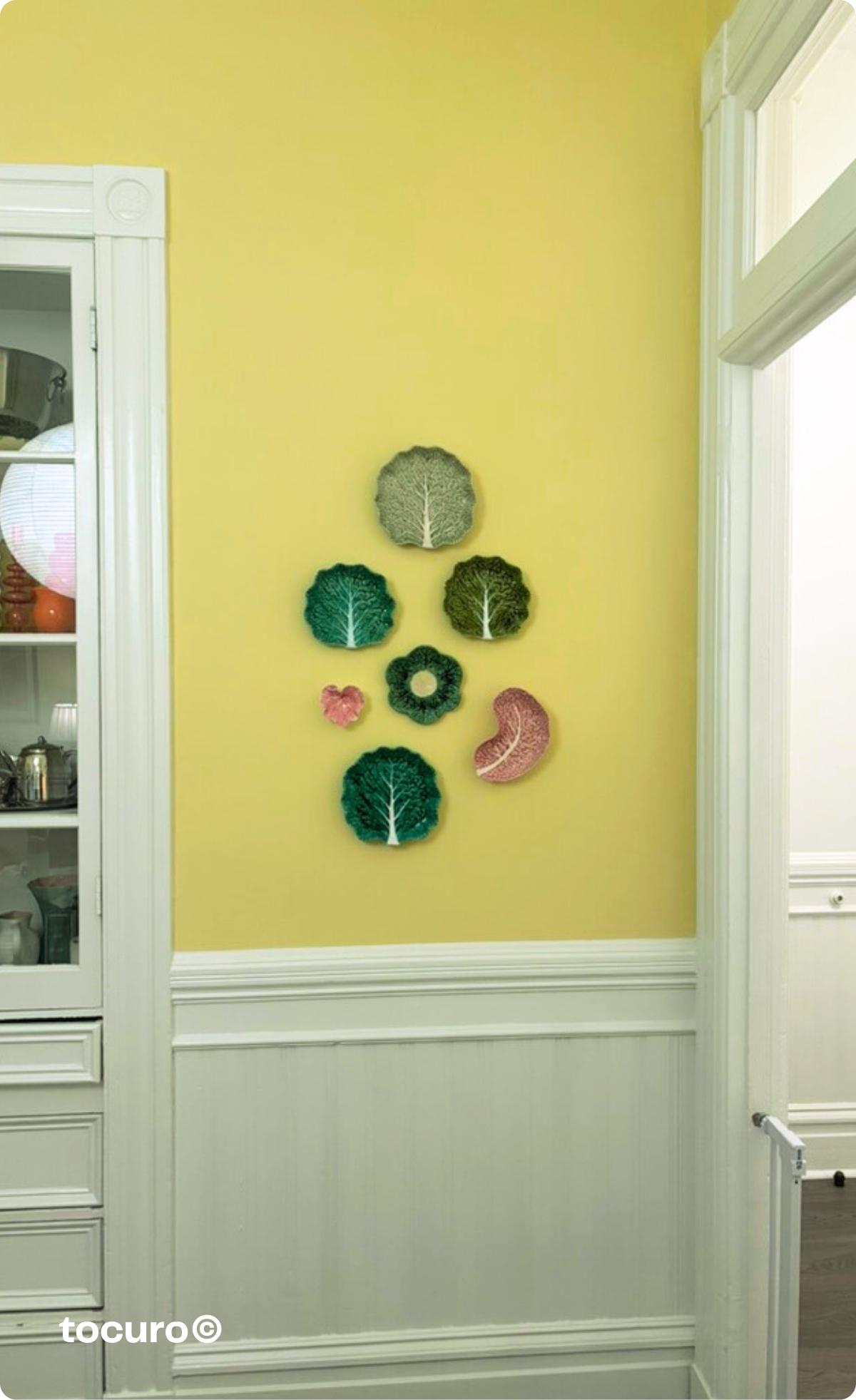
Bordallo Pinheiro cabbage plates styled in my dining room alongside other ceramics—proof that when you buy what you love, you'll always find a place for it, even if it doesn't match what you already own
For everyone else: I want to encourage anyone to become a collector—whatever that means to them. You might think there's a dogma or definition, but when you talk to people who've collected their whole lives, they all agree: if it's important to you and you like it, that's all that matters.
I heard this firsthand at a lecture during the San Francisco Fall Show. Peter Dunham, Beth Webb, and Ann Wolf—designers and collectors with decades of experience—discussed the stories behind their treasures. The through-line? Collect what moves you. It's not the monetary value that makes something important.
If everybody in the world had just one thing they could say was important to them and that mattered—wouldn't we be in a better place?
The Valuation Tool Isn't About Flipping
The evaluation feature helps you understand what you own and its value. But it's also meant to help you evaluate things you want.
You see something, you love it, you check the price. Is it a good deal? Should you go for it? Is it overpriced but you still don't care because you want it anyway? Both of those signals are valuable. And the truth is, if you love it and you like it, what it costs doesn't actually matter.
The best use of the valuation tool is identifying which pieces you're willing to part with in order to acquire new ones you don't have yet. That's the real beauty of it.
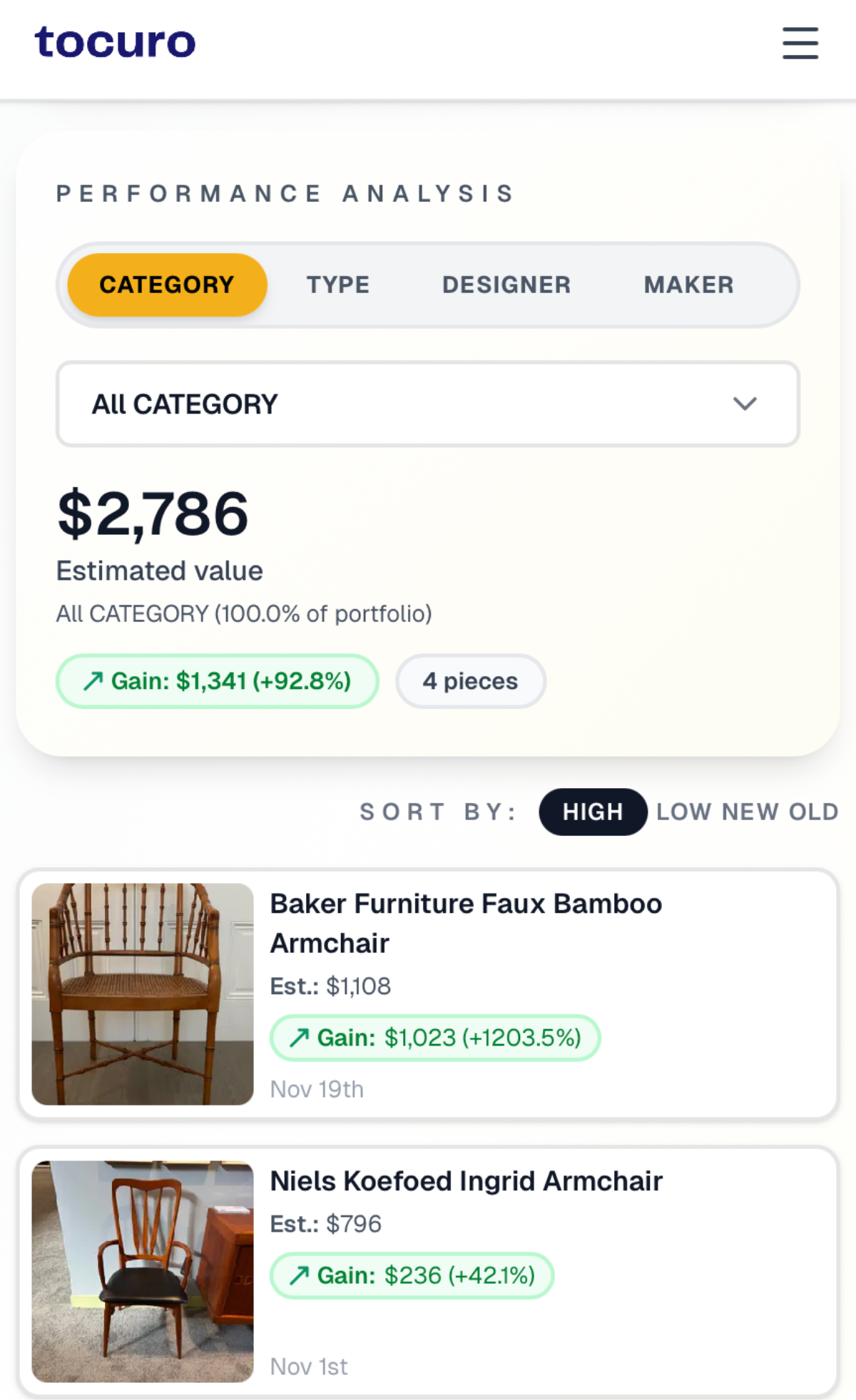
Tocuro's dashboard view displaying the total estimated furniture value of my collection —see all your pieces, their current market prices, and your gains at a glance, making it easy to manage your collection
This Doesn't Replace Experts
Let me be clear: Tocuro is not meant to replace professionals. These people have spent years working, studying, living, exploring, and traveling to gain their expertise. The idea that you shouldn't value that is absurd.
We're in the early days with Tocuro, and we're constantly improving identification accuracy. When it gets it right, it's very good. When it misses, it misses—and we've built in clear confidence signals so you know where you stand. For me, the most powerful moments using Tocuro happen out in the field: scanning a piece, then having the dealer verify or expand on what Tocuro said. Or seeing an online listing and using Tocuro to help determine my bid price—or whether to make the trip to see the item in person.
Tocuro is about combining both worlds. Every expert started somewhere—usually because they loved something. If you scan a piece with Tocuro that ignites your interest, and later you consult with an expert? That's what we want. That's a good thing.
What "Identifying Your Furniture" Really Means
Literally, it means helping people understand what they're living around and with. But it goes deeper than that. It's about understanding your own personal taste, your family history, where you're living, a culture or place you've come to know.
That's what I hope people feel when they get an identification: Encouragement. Desire. Excitement. The confidence to keep going. Not just clarity—though that's part of it. The goal is that feeling that makes you want to learn more, look harder, and build something that's yours.
That $85 Baker chair is still in my living room. I know exactly what it is now—1960s Regency, faux bamboo, cane detailing—and what it's worth. But what matters more is what it taught me: go with what you love, and the rest will follow.
Photo identification
Identify Your Item
Use Tocuro to identify your item from a photo and get an estimated value range when market data is available.